Setting the Scene Part 2 – Freedom and Regret: A Girl, Her Horse, and Her Father
“If you cannot be free, be as free as you can.”
Ralph Waldo Emerson
Freedom. The word freedom, for me anyway, sparks one of the most empowering emotions I’ve ever known. I understand it more clearly now, but even in my early years—as a pre-teen and later a grumpy teenager—it was a gut feeling. A force that drove me.
The problem was, I lived on a farm in the middle of nowhere. It felt like a cage. My parents were always busy, and there was no real “escape” from the isolation.
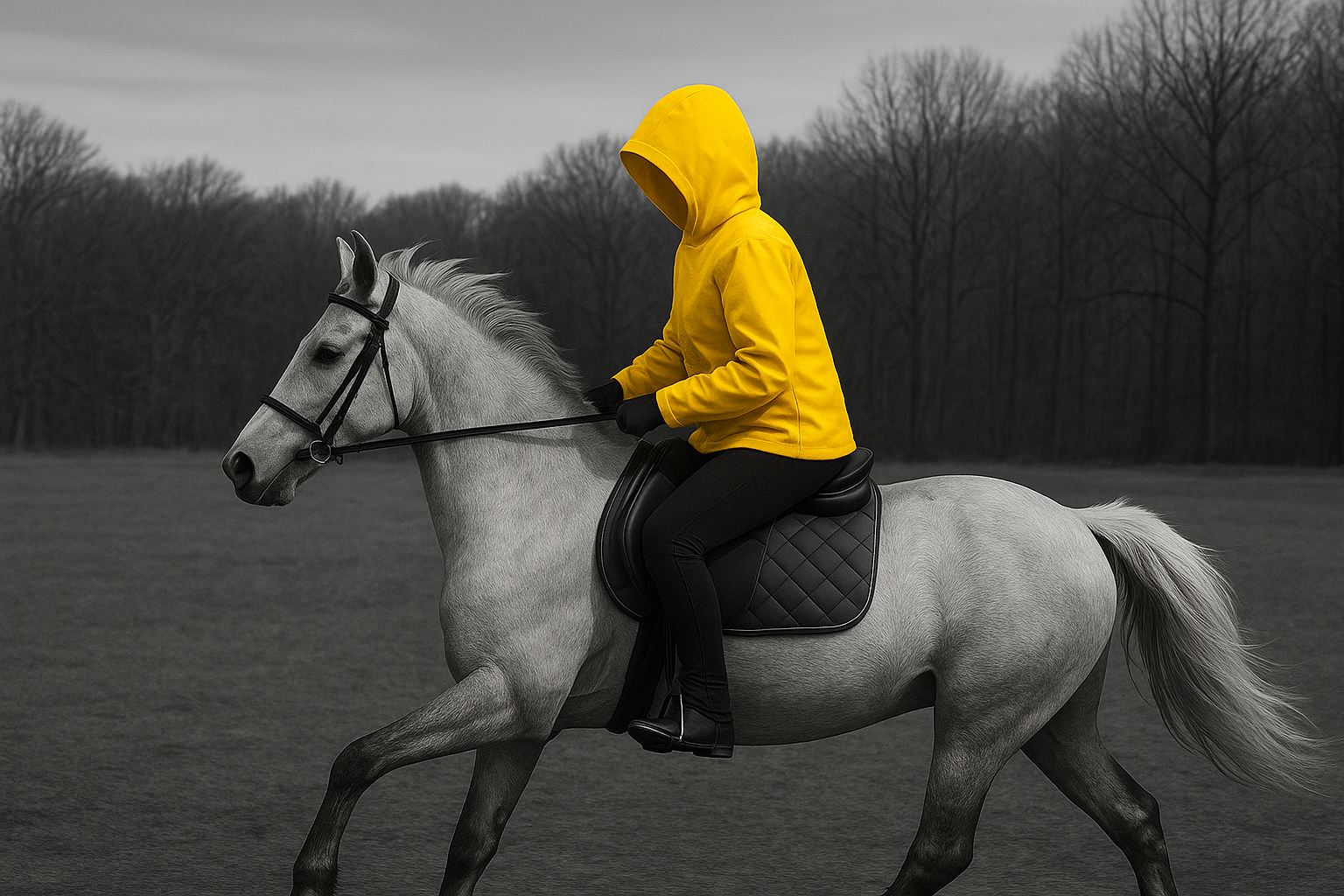
My absolute saving grace was horses—well, ponies at first—and so began a passion for riding and being around these magnificent creatures. I had many over the years, and since my mother had ridden in her childhood, she encouraged my love of it. But of course, she believed that riding should include hunting, which I absolutely detested. The idea of chasing a poor animal for sport was unbearable to me. Still, it seemed to be part of the “equestrian package,” so I played along—mainly for the social aspect. I did make a few friends to ride with, but riding gave me the freedom I so deeply craved.
I do need to thank my late mother for giving up so much of her time—mucking out stables, driving me to events, indulging this passion. But the truth is, I was never satisfied.
Does that sound strange?
Although I was a very capable rider, I was absolutely useless at academics, and when I look back at my schooling I start to see why. At the age of nine, I was sent to a private prep school where there were 800 boys—and just two other girls. My two brothers were already there, and I became just a number. Literally. I wasn’t referred to by my name, but as “******* 3”—since my brothers had taken the titles of ******* 1 and ******* 2.
At the time, I didn’t think much of it. But looking back now, I find it extraordinary—and frankly horrifying—that a school thought it was appropriate to assign numbers to children like that. It was a horrendous three years, and I suppose I’m grateful for my lack of memories from that time.
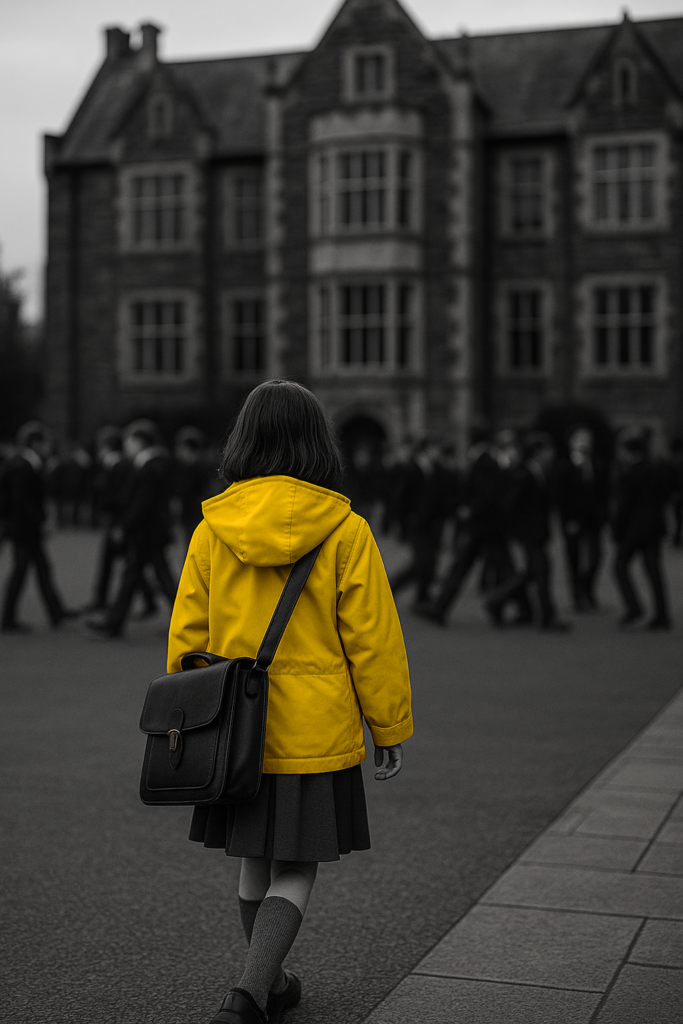
At age eleven, when it came time to move on, apparently I wasn’t good enough to follow my brothers into a private school education. Instead, I was sent to the local comprehensive school—in one of the roughest areas nearby. Although I desperately wanted to be away from home, I clung to the comfort of being near my horses. Now older, I had more freedom to ride without my mother hovering. Once the school bus or taxi dropped me off, I’d be on horseback and off into the countryside—away from the suffocating sadness of home.
My brothers—annoying as they were—were off at school, and I was left alone with two parents who clearly didn’t love each other. My mother spent more and more time in the city nearby and, while our farm was in a stunning part of England, it had begun to feel more like a trap than a retreat.
I wish I had made more of an effort to get to know my father. I had glimpses of this warm, funny man—someone with a wicked sense of humour—but more often than not, he scared me witless. By then I was truly acting out, desperate for any kind of attention. My very Victorian father responded with discipline—threats of the belt. At prep school we were caned on the hands or backside, so negative attention felt almost familiar. At least it was something.
My father’s life was extraordinary. He was a pioneer in the farming industry, a man of deep integrity and values. And I—well, I caused him a lot of pain. With my lies, stealing, and deception, I was difficult.
I began this piece with one of the most powerful emotions—freedom—but I end it with one of the most painful: regret. The truth is, I didn’t actually know regret as a child. What I felt back then was shame—a hot, heavy shame that sat in my stomach and coloured how I saw myself. I only recognised regret for the first time when my father passed away in 2024, when memories I’d pushed aside came rushing back with the weight of finality.
In my younger years, it was shame that drove the cycle I kept repeating: lie – shame – vindication – lie – shame – vindication. I’d deceive others, get found out, feel the sting of shame, receive some form of attention, and then start again. The attention, even when negative, was intoxicating—it made me feel seen.
Now, later in life, I’ve found myself deeply drawn to the country where my father was born—in Asia. It has become one of the most meaningful places in my world. And it’s there that I discovered another emotion as powerful as freedom: love. A kind of love that transforms, that brings clarity, and that makes everything finally make sense.
But more on that later, as Jo Bloggs continues her journey from chaos to clarity—where unexpected places become the backdrop for transformation, and healing reveals itself in the most surprising of ways. And yet, the pain of regret still surfaces from time to time, catching me off guard. It hasn’t vanished; it lingers like a shadow. But instead of letting it hold me back, I’ve begun to turn it into fuel—an engine that drives me forward. That regret, once paralysing, now pushes me to live more intentionally, to connect more deeply, and to honour the past not by dwelling in it, but by growing beyond it.